
Cloud computing is rapidly shifting the IT infrastructure of businesses. Nowadays, companies are heavily dependent on cloud computing for storing their data through online services. As cloud computing offers flexibility, scalability, and cost efficiency, the demand for bulky servers and expensive on-premise hardware is fading out. Cloud computing is the starting of the future of more advanced IT infrastructure.
What is Cloud Computing?
Cloud computing refers to different computing services via the internet. Computing services like storage, databases, networking, software, and analytics can be handled virtually through cloud computing. It is a pay as you go service. Cloud service providers like Amazon Web Services (AWS), Microsoft Azure, and Google Cloud empower businesses to access these resources whenever they need them, eliminating the need for physical hardware. Bangladesh’s leading software company Synesis IT is also building their own cloud server. Before cloud computing technology, companies needed to rent or buy on-premises setup to maintain and store data. Thanks to cloud computing, companies now can easily store and maintain their data with lower cost.
Cloud Computing Models
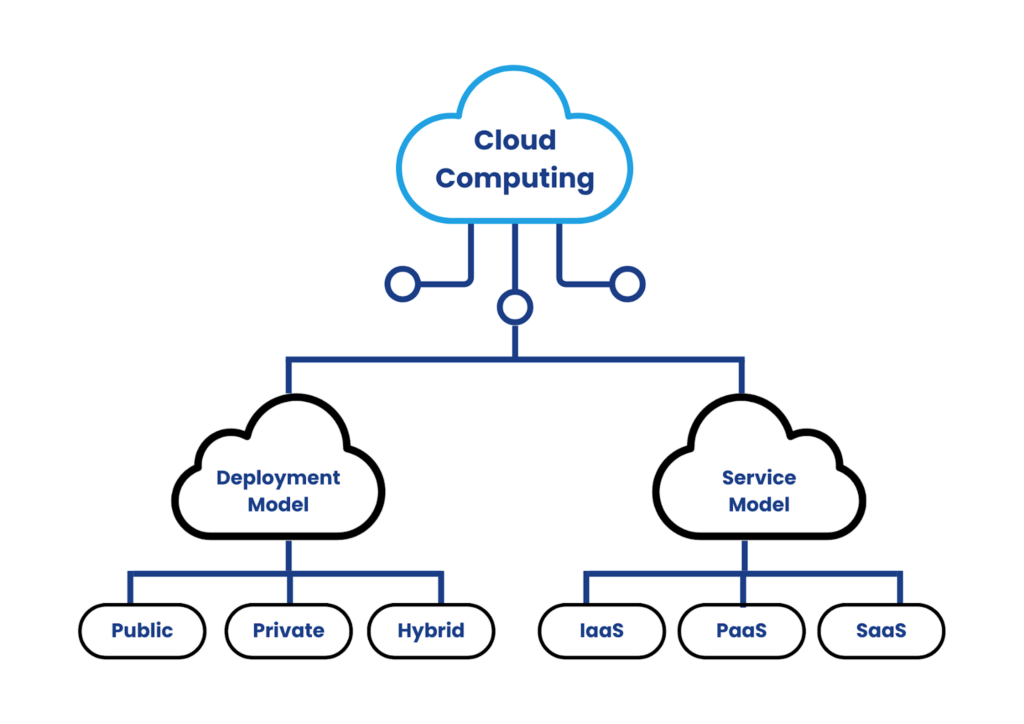
There are two models of cloud computing. Deployment models and Service Models. These models are divided into other sub models.
Deployment Models
Deployment models in cloud computing refer to the structure of cloud structure and the authority over the resource management. These models determine where the cloud resources are located and who can access and manage them. There are 3 types of deployment models.
1. Public Cloud: Here, the cloud infrastructures are available to many people. The cost of public cloud is cheaper than the others. These public clouds are owned by the cloud providers like AWS, Microsoft Azure and other cloud providers.
2. Private Cloud: This cloud infrastructure is accessed and organised by a specific organization. Only that organization can operate with that cloud service.
3. Hybrid Cloud: This cloud is the mixture of both private and public cloud. Users can enjoy the combination of both service features through this model.
Service Models
Service models determine the level of control of cloud servers. These models determine how the cloud servers can give services towards customers. Service models are as well categorized into 3 types.
1. IaaS: Infrastructure as a service or IaaS is a cloud service model where users can access basic computing infrastructure. It is often used by IT administrators for accessing only storage or virtual machines. But they will have to manage data, applications and middleware.
2. PaaS: Platform as a Service or PaaS provides cloud platforms runtime for developing, managing and testing applications. This model offers customers to deploy applications without acquiring or managing. Customers only have to manage applications and data.
3. SaaS: Software as a Service or SaaS offer hosting and managing applications for clients. Here everything is managed by the service provider.
Impact of Cloud Computing in IT Infrastructure
Cloud computing has changed the way of managing and handling big datasets. Nowadays, every organization is dependent on cloud services. There are many reasons why cloud computing is more effective than other ways of managing data.
Cost Efficiency & Scalability
Traditional IT infrastructure requires heavy upfront investments in hardware and maintenance. Cloud computing eliminates these costs by offering pay-as-you-go models. It helps businesses to scale resources up or down based on demand.
Enhanced Security & Compliance
Cloud providers invest heavily in security. Thus they can offer advanced encryption, identity management, and compliance certifications. This makes cloud infrastructure more secure than many on-premise setups.
Remote Work & Collaboration
With cloud-based tools like Microsoft 365 and Google Workspace, teams can collaborate in real time from anywhere. This shift has become essential in the era of remote and hybrid work.
Disaster Recovery & Business Continuity
Cloud computing ensures data is backed up and recoverable in case of hardware failure, cyberattacks, or natural disasters. Manually, data recovery process is very difficult.
AI & Big Data Integration
Cloud platforms provide the computing power needed for AI, machine learning, and big data analytics. Businesses can leverage these technologies without investing in expensive hardware.
That’s how cloud computing is impacting the IT infrastructure for different industries. In Bangladesh, Synesis IT is helping modernize how businesses and public services use technology in Bangladesh. Synesis IT provides cloud-based solutions for everything from government e-services to enterprise-level apps. By helping organizations shift to the cloud, Synesis IT enables them to reduce costs, improve service, and prepare for a digital future.
The Future of Cloud Computing
As cloud computing technology is updating day by day, there are huge possibilities in this sector. Also, the providers are adopting renewable energy to reduce carbon footprints. Moreover, quantum technology can be also integrated with cloud computing. Companies like IBM are making quantum computing accessible via the cloud.
Cloud computing is the future of IT infrastructure. From cost savings and scalability to AI integration and remote work support, cloud computing empowers organizations to innovate and grow efficiently. As technology evolves, companies that invest in cloud computing today are building a strong foundation for tomorrow. Whether you’re a startup or an enterprise, now is the time to leverage the cloud computing based IT strategy.