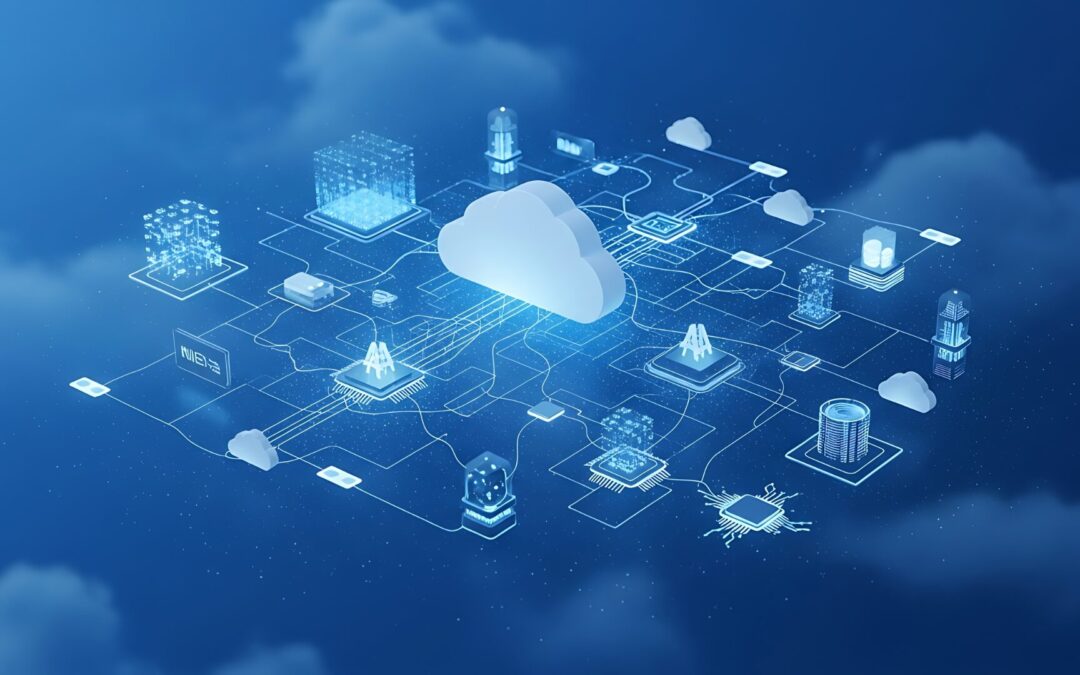
Businesses today are constantly seeking ways to stay agile, competitive, and cost-effective. One of the most transformative strategies to achieve these goals is cloud migration — moving digital assets, including data, applications, and IT infrastructure, from on-premises environments to the cloud.
At Synesis IT, we help organizations navigate this complex journey with precision and care, ensuring that your migration aligns seamlessly with your business goals.
Understanding the route and the benefits is critical if you’re thinking about embarking on this trip for your organization. Let’s look at the main steps of cloud migration and the substantial benefits it provides.
What is Cloud Migration?
Cloud migration refers to transferring business operations and digital resources from traditional, on-premises data centers to cloud-based platforms such as AWS, Microsoft Azure, or Google Cloud. It can also involve moving from one cloud provider to another or transitioning to a hybrid or multi-cloud environment.
Simply put, it’s like upgrading from a physical office with filing cabinets to a sleek, modern workspace where everything is accessible from anywhere — securely and efficiently.
Through Synesis IT’s tailored cloud migration services, we ensure this upgrade is not just smooth but also strategically aligned with your long-term digital transformation goals.
Key Steps in the Cloud Migration Journey
1. Assessment and Planning
Begin by understanding your present infrastructure. Determine your company objectives: Do you intend to cut costs? Improve scalability? Increase performance?
Synesis IT starts with a comprehensive assessment phase, helping you map current workflows to future-ready cloud environments. Our experts collaborate with your teams to design a strategy that mitigates risks and maximizes value.
This is also the time to decide whether to use a public, private, hybrid, or multi-cloud strategy based on your requirements.
2. Choosing the Right Cloud Provider
Evaluate providers based on their features, pricing models, security standards, compliance offerings, and global reach. Popular choices include AWS, Microsoft Azure, and Google Cloud Platform (GCP).
Synesis IT leverages deep partnerships with leading cloud providers, giving you access to best-in-class solutions that are secure, scalable, and cost-effective.
3. Prioritizing Data and Applications
Not everything needs to move at once. Prioritize which applications and data sets should migrate first and categorize them:
Mission-critical apps
Apps requiring refactoring
Legacy systems to retire
Our team at Synesis IT helps you create a phased roadmap, ensuring that high-priority workloads are migrated smoothly while minimizing downtime and disruptions.
4. Selecting the Migration Strategy
Understand the famous “6 R’s” of cloud migration:
Rehost: Lift and shift applications as they are.
Replatform: Make minor adjustments for better cloud performance.
Repurchase: Switch to a new cloud-native product.
Refactor: Redesign applications for cloud optimization.
Retire: Phase out redundant applications.
Retain: Keep certain apps on-premises, if necessary.
Synesis IT’s migration architects guide you in selecting the best-fit strategy for each workload, ensuring performance optimization and future scalability.
5. Testing
Before going live, it’s crucial to thoroughly test the environment to ensure everything works as expected. Performance, security, and compliance tests are essential at this stage.
With Synesis IT’s rigorous testing protocols, you can be confident that your new cloud environment meets your operational and security standards before full deployment.
6. Migration and Optimization
Once testing is complete, it’s time to execute the migration. Post-migration, continuous optimization is vital to ensure you’re getting the most out of your cloud investment.
Post-migration, Synesis IT doesn’t just stop at deployment. We continue to work with you to fine-tune performance, manage costs, and unlock advanced cloud-native capabilities.
Benefits of Cloud Migration
Cost Efficiency Eliminate the expense of maintaining physical infrastructure and enjoy flexible, pay-as-you-go pricing models.
Scalability Quickly scale your resources up or down based on your business demands.
Enhanced Security Leading cloud providers offer advanced security tools and compliance certifications. Synesis IT further enhances these with tailored security layers to meet your specific needs.
Business Continuity Ensure uptime and data recovery with robust disaster recovery solutions.
Collaboration and Innovation Enable real-time collaboration and leverage emerging technologies like AI and analytics.
With Synesis IT’s end-to-end support, these benefits become not just promises but tangible outcomes, empowering your organization to focus on innovation while we handle the complexity of your cloud environment.
Ready to Begin Your Cloud Journey?
Cloud migration is more than a technical shift — it’s a strategic move toward future-ready business operations. With careful planning and the right partner, your journey to the cloud can unlock incredible value.
At Synesis IT, we are committed to being that trusted partner, guiding you every step of the way to ensure a successful, seamless transition to the cloud.
As the global workforce evolves, one thing is becoming increasingly clear: adaptability is key. Rapid technological advancements, shifting market demands, and unexpected disruptions like global pandemics have reshaped how businesses operate and manage talent. In this new era, organizations are turning to staff augmentation as a strategic way to enhance flexibility and stay agile in the face of change.
A Shift Toward a More Flexible Workforce
Gone are the days when long-term, in-house teams were the only way to drive projects forward. Today’s dynamic business environment requires companies to respond quickly to fluctuating workloads, emerging technologies, and specialized skill demands. Staff augmentation allows organizations to seamlessly scale teams up or down based on real-time needs—without the long timelines, overhead costs, or rigid commitments of traditional hiring.
This approach isn’t about replacing full-time roles; it’s about complementing them. It empowers internal teams by injecting specialized skills exactly when and where they’re needed, helping businesses maintain momentum without burning out their core staff.
Agility in Action
One of the standout benefits of staff augmentation is speed to execution. Whether you’re deploying a new cloud-based solution, exploring AI-driven applications, or navigating complex compliance requirements, having access to on-demand expertise can dramatically reduce lead time and improve outcomes.
This agility is especially crucial for sectors like IT, where technologies and frameworks evolve rapidly. Organizations that rely solely on in-house capabilities often struggle to keep pace. Staff augmentation bridges that gap, enabling faster adoption of innovation while minimizing operational risk.
A Strategic Advantage for Businesses
When done right, staff augmentation becomes more than a hiring tactic—it becomes a strategic advantage. With the ability to tap into global talent pools, companies gain access to niche expertise that might not be readily available in local markets. This opens doors to new capabilities, broader perspectives, and fresh problem-solving approaches.
It also fosters a culture of continuous learning. As external specialists work alongside internal teams, knowledge transfer becomes a natural byproduct, helping upskill employees and increase organizational resilience over time.
Trusting the Right Partner
While the concept of staff augmentation is simple, its success depends heavily on execution. Working with experienced partners can make all the difference. For example, companies like Synesis IT have been quietly helping businesses expand their IT capabilities by offering not just skilled professionals but also experienced project leadership to ensure alignment, quality, and timely delivery.
By maintaining a curated network of domain experts and integrating them with seasoned technical managers and project leads, such firms offer a more holistic and dependable approach to team augmentation. It’s not just about filling roles—it’s about enabling success at every stage of the project lifecycle.
Looking Ahead
As the future of work continues to evolve, flexibility and agility will remain essential traits for competitive organizations. Staff augmentation is no longer just a workaround for talent shortages—it’s a forward-thinking model that empowers businesses to move with speed and confidence in an unpredictable world.
Whether it’s building new digital solutions, managing infrastructure, or navigating emerging challenges, augmenting your team with the right talent—at the right time—can be the key to unlocking sustainable growth.
As global competition intensifies and digital transformation accelerates, organizations must rethink how they scale and deliver complex technological initiatives. One strategy stands out: IT staff augmentation. By integrating external experts into internal teams, businesses are unlocking speed, flexibility, and innovation at scale.
At Synesis IT, we’ve embraced staff augmentation for IT projects as a core service—empowering organizations to adapt, grow, and thrive in dynamic environments.
What Is IT Staff Augmentation?
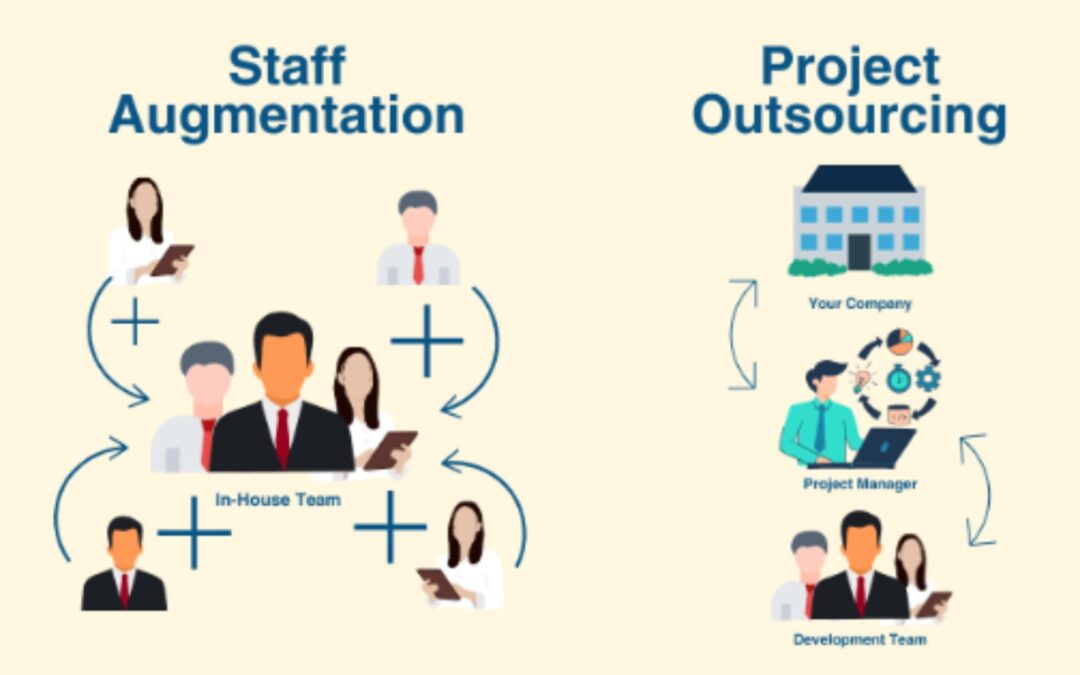
IT staff augmentation is a strategic workforce model where businesses temporarily extend their teams with highly skilled IT professionals. It enables full control over project execution while gaining access to specialized talent.
Unlike outsourcing, which transfers project ownership, staff augmentation benefits include maintaining in-house control, seamless integration, and real-time collaboration with external talent.
Key Benefits of IT Staff Augmentation
1. Faster Project Delivery
Organizations can boost IT project delivery by bypassing long hiring cycles. Onboard talent in weeks—not months—and accelerate IT development with pre-vetted professionals.
Time-to-Hire Comparison:
In-house hiring: 42 days
Staff augmentation: 7–14 days
2. Access Specialized IT Skills
Gain instant access to niche roles like cybersecurity analysts, DevOps engineers, and AI/ML experts. Using staff augmentation to access niche IT skills ensures you’re never constrained by your in-house bandwidth.
3. Flexible IT Staffing & Scalability
Scale teams up or down depending on project scope. Ideal for businesses navigating rapid growth or high variability in workload. Scaling IT teams becomes seamless with staff augmentation.
4. Cost-Effective IT Staffing
Minimize recruitment costs, training expenses, and long-term liabilities. While it’s not just about affordability, cost-effective IT staffing provides significant financial and operational value.
5. Improve IT Project Timelines
With focused expertise and no onboarding lag, you can improve IT project timelines and hit deadlines faster with quality intact.
Traditional Hiring vs Project Outsourcing vs Staff Augmentation
Feature
Staff Augmentation
Project Outsourcing
Traditional Hiring
Control Over Projects
High
Medium
High
Team Integration
Seamless
Separate
Seamless
Cost Structure
Hourly or contract-based
Fixed-cost or milestone-based
Salary, benefits, overhead
Flexibility
High
Low
Low to Moderate
Expertise
Access to specific skills for a defined period
Access to a broader range of skills; vendor assumes responsibility
Focused on the skillset of existing or newly hired staff
Accelerate IT development with instant skilled manpower
Short-term development sprints
On-demand IT talent with agile expertise
Complex cloud or AI implementation
Access specialized IT skills for cutting-edge tech stacks
Security audits or SOC/NOC teams
Cybersecurity staff augmentation benefits
Government or enterprise digital projects
Staff augmentation for software development projects
In-House Hiring vs. Staff Augmentation
Parameter
In-House Hiring
IT Staff Augmentation
Time-to-hire
6–8 weeks
1–2 weeks
Recruitment cost
High
Low
Flexibility
Low
High
Access to niche talent
Limited
Global pool
Team integration
Internal-only
Integrating augmented staff into existing IT teams
Training Costs
Significant investment in onboarding and ongoing training
Often lower, as augmented staff are typically experienced
Benefits
High (health insurance, retirement plans, etc.)
None (typically managed by the provider)
The cost of staff augmentation can also vary depending on several factors, including the level of expertise required, the geographical location of the augmented staff (with rates differing significantly between regions), and the duration of the engagement. For instance, hourly rates for senior developers in regions like North America or Western Europe tend to be higher than those in Latin America or Asia. Organizations should consider these factors when budgeting for staff augmentation and potentially explore nearshore or offshore options to optimize costs while still accessing the necessary skills.
Role
Latin America
Eastern Europe
Asia
Frontend Developer
$28 – $55/hr
$32 – $60/hr
$20 – $58/hr
Backend Developer
$28 – $55/hr
$32 – $60/hr
$18 – $60/hr
Full-stack Developer
$32 – $57/hr
$36 – $66/hr
$20 – $63/hr
Mobile Developer
$28 – $50/hr
$32 – $60/hr
$17 – $55/hr
Ultimately, the cost-effectiveness of staff augmentation can be measured by its return on investment (ROI). This involves tracking various metrics such as project timelines, cost savings achieved compared to traditional hiring, the flexibility gained in scaling the workforce, the impact on employee productivity and engagement, and feedback from stakeholders. A positive ROI indicates that the investment in staff augmentation is yielding tangible benefits, including not only financial savings but also improved efficiency and the ability to drive innovation.
How Staff Augmentation Boosts Innovation
The role of staff augmentation in digital transformation is profound. It brings:
Diverse expertise in internal teams
Cross-industry experience for out-of-the-box solutions
Agility in adopting new technologies without retraining internal staff
Ultimately, staff augmentation innovation is about enabling smarter teams and faster breakthroughs.
Managing Augmented IT Staff Effectively
Assign clear roles & KPIs
Maintain agile workflows
Use collaboration tools (Jira, Slack, MS Teams)
Conduct regular performance reviews
Managing augmented IT staff effectively ensures alignment, accountability, and productivity from day one.
FAQs: Everything You Need to Know
What are the pros and cons of staff augmentation?
Pros: Speed, flexibility, cost-efficiency, niche skills Cons: Integration challenges if not managed well
When is staff augmentation the right model?
When you need:
Project speed
Short-term or specialized talent
Team scalability without long-term commitment
How does staff augmentation compare to managed services?
Managed services own full project delivery; staff augmentation embeds talent into your team while you retain control.
Choosing the Right IT Staff Augmentation Partner
Looking for the best IT staff augmentation companies?
Here’s what to look for:
Proven portfolio and client success stories
Transparent IT staff augmentation pricing models
Ability to align with your project timelines and goals
Cultural fitness and compliance with data protection standards
Why Synesis IT?
At Synesis IT, we deliver flexible, secure, and scalable IT staff augmentation services. Our experts have supported national digital infrastructure, enterprise-grade software systems, and complex government initiatives. Whether you need AI engineers, DevOps teams, or cybersecurity analysts—we have you covered.
Let’s Make Your Next Project a Success
Need to reduce IT hiring time?
Want to accelerate IT project delivery?
Ready to integrate elite talent seamlessly?
Contact Synesis IT to get started with tailored IT resource augmentation that delivers real results.
At Synesis IT, we understand how crucial it is to have the right talent in place exactly when you need it. Whether you’re scaling up for a major project, tackling a new technology, or filling gaps in your current team, we’ve got you covered. Our staff augmentation services make it easy for you to access skilled professionals who can jump right in and help drive your projects forward, all while being supported by our seasoned project leadership.
We know that flexibility and speed matter more than ever in today’s fast-paced environment. That’s why we offer a seamless solution that allows you to bring in the talent you need—without the delays, overhead costs, or long-term commitments of traditional hiring. With Synesis IT, you’re not just adding resources—you’re enhancing your team’s capabilities and unlocking new potential for success.
What is Staff Augmentation?
Staff augmentation is a flexible outsourcing strategy that allows companies to hire external professionals for short-term or long-term projects. Unlike traditional hiring, this model provides access to skilled specialists without the overhead costs associated with permanent employment. Whether you need IT experts for software development, cloud migration, cybersecurity, or project management, staff augmentation enables you to scale your team based on specific project requirements.
Why Opt for Synesis IT’s Staff Augmentation?
1. Access to a Global Talent Pool
Synesis IT connects you with a vast network of experienced professionals, ensuring that you have access to the right talent when you need it. Whether you’re looking for specialists in artificial intelligence (AI), cloud computing, cybersecurity, or large language models (LLMs), we have experts who can hit the ground running.
2. Cost Efficiency
By opting for staff augmentation, you can save on recruitment, training, and overhead costs. A study by Deloitte shows that companies can reduce labor costs by up to 30% by adopting flexible workforce models like staff augmentation. Synesis IT’s staff augmentation services allow you to focus on your core business objectives while cutting down on the expenses of full-time hiring.
3. Flexibility and Scalability
Business needs are constantly changing, and the ability to scale your team up or down is critical for maintaining operational agility. Staff augmentation enables you to quickly adjust your team size to meet project demands, without the delays or costs associated with traditional hiring. Whether you need additional developers for a short-term project or long-term IT support, Synesis IT has the flexibility to accommodate your needs.
4. Faster Project Delivery—Backed by Experienced Leadership
At Synesis IT, our staff augmentation services don’t just provide access to skilled professionals—they come with the added benefit of experienced project leadership. Each of our projects is supported by seasoned Project Managers (PMs) and Technical Managers (TMs) who bring 10-20 years of experience to the table.
Our PMs and TMs work closely with the foreign team to ensure project quality and adherence to deadlines. This level of expert oversight accelerates timelines without compromising on quality, allowing you to stay ahead of the competition and meet your goals faster. In fact, companies that leverage staff augmentation report a 20% increase in project completion rates, thanks to the availability of experienced personnel and management.
5. Collaborative Success
Synesis IT’s staff augmentation model ensures that our PMs and TMs collaborate seamlessly with the augmented team and your internal stakeholders. The PMs and TMs regularly monitor progress, ensure smooth communication, and proactively manage any risks that could impact the project. This collaborative approach ensures that your projects not only get completed on time but also meet the highest standards of quality and efficiency.
6. Focus on Core Competencies
Managing an in-house team often diverts time and resources from your core business activities. Staff augmentation allows you to offload non-core functions, so your internal team can focus on what they do best. Synesis IT provides experts in various domains who can handle specialized tasks, ensuring seamless operations and allowing your team to concentrate on strategic initiatives.
Project Delivery: Managed by Experienced Leaders
When you opt for Synesis IT’s staff augmentation services, you don’t just gain access to skilled professionals—you get the added assurance of having experienced Project Managers (PMs) and Technical Managers (TMs) overseeing the delivery of your project. Each PM and TM brings 10-20 years of experience to the table, ensuring that every project is handled with precision and expertise.
Our PMs and TMs work closely with the foreign team, guiding them through every stage of the project. They are responsible for maintaining the highest quality standards, managing timelines, and ensuring that all deliverables align with your business objectives. This blend of expert management and specialized talent guarantees not only fast project delivery but also impeccable results.
Real-World Impact: How Staff Augmentation Benefits Businesses
According to a report by Staffing Industry Analysts, 73% of companies now use some form of flexible workforce, including staff augmentation, to meet changing project demands. With industries like IT and software development facing significant talent shortages, staff augmentation has become a go-to strategy for companies looking to stay competitive in the digital age.
Whether it’s managing complex cloud migrations or implementing cutting-edge cybersecurity measures, businesses that leverage staff augmentation report higher satisfaction with project outcomes. In a survey by McKinsey, 90% of executives indicated that flexible staffing models, like staff augmentation, played a critical role in boosting their organization’s agility and resilience during unpredictable market conditions.
Why Choose Synesis IT?
At Synesis IT, we pride ourselves on our ability to provide organizations with the right talent for every project. Our dedicated team of professionals undergoes rigorous screening to ensure that only the best candidates join your team. With years of experience in providing IT solutions to businesses across sectors, we understand the importance of having reliable, skilled professionals on board. We also offer ongoing support to ensure that our augmented staff meets your expectations throughout the project.
As businesses continue to navigate the complexities of today’s digital-first world, the demand for flexible staffing solutions like staff augmentation will only grow. Synesis IT is your trusted partner in providing the expertise you need to complete projects efficiently, reduce costs, and achieve operational success. Whether you’re tackling an AI-driven initiative or enhancing your cybersecurity infrastructure, our staff augmentation services are designed to empower your business to achieve more with less.
Contact Synesis IT today to learn more about how our staff augmentation services can help you scale, innovate, and thrive in an increasingly competitive market.
Customer service is evolving—and fast. In an era defined by digital interactions, customers no longer accept long wait times, inconsistent support, or impersonal service. They want seamless, 24/7, and personalized responses across multiple platforms. This is where Artificial Intelligence (AI) and Large Language Models (LLMs) come in.
AI and LLMs represent a significant leap forward in how businesses manage customer interactions. These technologies can read, understand, and respond to customer queries almost like a human—sometimes even better. From chatbots to sentiment-aware assistants, they are revolutionizing the way businesses connect with customers.
In this blog, we take you through the market opportunities, leading trends, major players, pricing structures, and how Synesis IT is positioned to help your business stay ahead in the AI-driven customer service revolution.
Market Potential and Growth
The market for AI-powered customer service is expanding quickly; it is projected that the global large language models market would reach USD 5,617.4 million in 2024 and increase at a compound annual growth rate (CAGR) of 36.9% between 2025 and 2030.
AI in Customer Service Market Forecast
Metric
2024 Value (USD Billion)
2030 Forecast (USD Billion)
CAGR (2024-2030)
Global Market Size
12.06
47.82
25.8%
North America Market Size
4.35
14.91
22.8%
AI Agents Market Size
–
47.1
–
AI in Customer Exp. Market
10.5 (in 2023)
76.7 (by 2033)
22.0%
Metric
2024 Value (USD Billion)
2030 Forecast (USD Billion)
CAGR (2024-2030)
Global Market Size
12.06
47.82
25.8%
North America Market Size
4.35
14.91
22.8%
AI Agents Market Size
–
47.1
–
AI in Customer Exp. Market
10.5 (in 2023)
76.7 (by 2033)
22.0%
With a compound annual growth rate (CAGR) of 57.4% from 2025 to 2034, the LLM market—a key element of AI-powered customer service—is anticipated to reach over USD 224.0 billion by that year. The market for conversational AI, which mostly uses LLMs, is likewise expanding rapidly; it is expected to reach USD 151.6 billion by 2033 from a 2024 market size of USD 13.6 billion.
Large Language Model (LLM) Market Forecast
Metric
2024 Value (USD Million)
2030 Forecast (USD Million)
CAGR (2025-2030)
Global Market Size
5,617.4
35,434.4
36.9%
LLM Powered Tools Market
2,400
224,000
57.4%
LLM Chatbot Market
15,000
89,900
25.08%
The market for chatbots, and more especially the use of LLMs in chatbots, is expected to reach $89.9 billion by 2032, with a compound annual growth rate (CAGR) of 25.08%. With the greatest revenue share of 32.1% in 2024 and more than 39.7% of the market for LLM-powered products, North America has made a name for itself as a leader in the adoption of LLMs.
Conversational AI Market Forecast
Metric
2024 Value (USD Billion)
2033 Forecast (USD Billion)
CAGR (2025-2033)
Global Market Size
13.6
151.6
29.16%
The market for AI-powered customer service is expanding rapidly in Asia Pacific, because of the region’s sizable consumer base, quick acceptance of new technologies, and growing need for better customer experiences.
What’s Driving This Growth?
Digital Transformation: Businesses are investing in digital platforms to stay competitive.
Cost Pressure: AI can reduce operational costs significantly, especially in customer service.
Consumer Expectations: Customers demand instant, intelligent, and personalized service.
Scalability: AI allows companies to scale support without expanding headcount.
Trends Reshaping the Industry
Technological advancements, particularly in AI and Large Language Models (LLMs), are significantly transforming personalized customer service. Generative AI is becoming crucial for creating more efficient, human-like interactions, while autonomous AI agents are evolving to take on more complex roles. Multimodal AI is expanding interactions beyond text and voice to include visuals and gestures.
Several emerging applications are enhancing customer experiences. AI-driven hyper-personalization offers deeply tailored interactions based on individual behavior. Proactive AI anticipates customer needs to prevent issues. AI agents handle tasks from simple FAQs to complex problems, while LLM-powered chatbots provide 24/7 support and automate routine tasks, increasing efficiency and saving costs. AI also assists human agents in real-time, automates note-taking, creates dynamic FAQs, manages knowledge bases, analyzes sentiment, handles ticketing, and provides personalized product recommendations.
Trend
What It Means for Businesses
Shift from Scripted Bots to LLMs
More natural, human-like conversations
Omnichannel Integration
Consistent experience across WhatsApp, Messenger, email, etc.
Sentiment & Emotion Detection
Understand and act on how your customers feel
Predictive AI Assistants
Solve problems before the customer complains
Real-Time Support for Agents
AI co-pilots suggest the best responses instantly
Adoption of these technologies varies by industry. Media and entertainment are expected leaders due to their focus on personalization. Retail and e-commerce heavily use AI for recommendations and search (holding the largest LLM market share in 2024). Healthcare utilizes AI for tailored communication and patient services. The Banking, Financial Services, and Insurance (BFSI) sector leads in call center AI adoption (largest market share in 2024) for fraud detection, risk assessment, and automation. Telecommunications providers use AI to automate network troubleshooting.
Advantages and Disadvantages of AI in Customer Service
The adoption of AI and LLMs in personalized customer service offers numerous advantages for businesses. These technologies streamline customer service workflows, enabling faster response times and more efficient problem-solving. AI facilitates around-the-clock, multilingual support, providing instant replies to customer inquiries. By analyzing past behaviors and preferences, AI can personalize customer interactions, leading to more relevant and engaging experiences.
Benefits:
24/7 Support without extra staffing
Increase in productivity.
Personalization at scale
30–40% cost reduction in support operations
Data-driven decisions from real-time insights
Higher satisfaction and customer loyalty with Increased CSAT Score for up to 10 points.
10-12% Efficiency Gains implementing LLMs.
Challenges:
Despite the numerous benefits, businesses must also consider the potential disadvantages of using AI and LLMs in customer service. AI may lack the crucial human empathy and nuanced problem-solving abilities that human agents possess, particularly in sensitive or emotionally charged situations. These systems can also struggle with complex or highly unique customer queries that fall outside their programmed parameters and training data. The initial implementation of AI solutions can involve substantial upfront costs, along with ongoing expenses for maintenance, updates, and training, which can be challenging for smaller businesses. There is an inherent risk of errors and misinterpretations by AI systems, which can lead to customer frustration and erode trust in the service. Many customers still prefer interacting with human agents, especially when dealing with sensitive or urgent issues, and an over-reliance on AI without a clear escalation path can lead to dissatisfaction.
High initial investment in AI system implementation
Requires clean and structured data for optimal performance
Risk of biased or inappropriate responses
Regulatory hurdles and compliance concerns
Market Leaders and Key Competitors
Company
Flagship Product
Target Audience
Zendesk + OpenAI
Zendesk AI
Mid to Large Enterprises
Intercom
Fin (AI Agent)
SMBs & SaaS companies
Salesforce
Einstein GPT
Enterprise CRM users
Ada
Ada CX
eCommerce & Telecom
Freshworks
Freddy AI
Multinational Corporations
These platforms focus on automating interactions, enhancing agent performance, and improving customer experience through AI.
Pricing Models and Feature Overview
The pricing landscape for AI and LLM-powered customer service solutions is diverse, reflecting the varied needs and scales of adopting businesses. Several common pricing structures are prevalent in the market. Subscription-based models are widely offered, as seen with OpenAI’s ChatGPT Team plan, which has a fixed per-user monthly or annual fee, while the Enterprise plan offers customized pricing. Freshdesk provides different subscription tiers, such as Growth, Pro, and Enterprise, each including varying levels of access to their Freddy AI Agent, with options to purchase additional AI sessions. Zendesk also employs a subscription-based approach with plans like Suite Team, Growth, Professional, and Enterprise, each offering different sets of features and AI capabilities, with add-ons like AI Agents and Copilot available for enhanced functionality. Salesforce Service Cloud’s Einstein 1 Service edition is priced at a fixed cost per user per month, billed annually, and includes limited credits for its AI features.
Usage-based pricing is another common model, particularly for cloud-based AI platforms. Google Vertex AI, for example, charges based on the usage of resources for training, deploying, and making predictions with its natural language processing models.60 This model is often suitable for businesses with fluctuating workloads, as they only pay for the resources they consume.
Customized pricing is typically offered for enterprise-level solutions, where the vendor tailors the platform and its features to meet the specific requirements of a large organization. OpenAI’s ChatGPT Enterprise plan exemplifies this, with pricing determined through direct consultation with their sales team. Similarly, Zendesk’s Suite Enterprise plan also requires contacting sales for a tailored solution.
Several factors can influence the pricing of these solutions. These include the number of users or agents who will be utilizing the platform, the volume of customer interactions handled, the complexity and sophistication of the AI features required, and the level of customer support and customization services included in the offering. For businesses considering adopting these technologies, it is crucial to benchmark the pricing of different vendors against their competitors and to carefully assess the potential return on investment (ROI). A significant driver for the adoption of AI and LLMs in customer service is their potential to be more cost-effective than traditional methods, such as hiring and training additional human agents to handle increasing customer service demands.62 By automating routine tasks and improving agent efficiency, AI-powered solutions can offer substantial operational cost savings.
Platform
Pricing Model
Starting Price
Intercom Fin
Seat + usage-based
$74/seat/month
Ada
Enterprise tiered pricing
~$2,000/month
Freshworks
Tiered SaaS plans
From $95/month
Zendesk AI
Add-on to CRM plans
~$50/user/month
Common Features Across Market Leaders:
AI-powered Chatbots with human fallback
Sentiment & intent detection
Integration with CRM and ticketing systems
Support for multiple languages
Real-time analytics and dashboards
What the Future Holds
The future of AI and LLMs in customer service is poised for significant evolution. AI is expected to become the central intelligence hub for contact centers, with human support teams increasingly utilizing AI and machine learning tools to enhance their capabilities. Conversational AI bots will become more sophisticated, capable of reacting to customer inputs in real-time and engaging in more human-like dialogues. Generative AI will play a crucial role in personalizing training programs for customer service teams, enabling them to handle a wider range of scenarios effectively. AI-driven personalization will advance to the point of anticipating customer needs proactively, addressing potential issues before they even arise. There is an anticipated acceleration in the trend towards industry-specific private LLMs, allowing businesses to leverage the power of these models while maintaining greater control over their data and ensuring higher accuracy.
AI and LLMs are evolving rapidly. Here’s what we foresee:
Voice & video AI assistants offering multimodal interactions
Low-code/no-code platforms for rapid AI customization
Tighter regulations to safeguard data and user privacy
Companies that adapt early will build long-term competitive advantages.
Why Choose Synesis IT for AI-Powered Customer Service?
At Synesis IT, we blend local expertise with cutting-edge global technology to build smart, secure, and scalable AI customer service systems. Here’s why we stand out:
Tailored LLM Solutions
We go beyond plug-and-play bots. Our AI systems are custom-trained to suit your industry, workflows, and cultural context—making every interaction relevant.
Multilingual Capabilities
We offer native support for Bangla, English, and other local dialects, ensuring inclusivity and better comprehension for your customers.
Deployment Flexibility
You choose where your data lives. Whether on-premise or on cloud, we ensure security, speed, and compliance.
Data Protection First
We follow GDPR, GoB regulations, and enterprise-grade security protocols to protect your customer data at every step.
Proven Results
35% drop in customer service costs within 6 months
20% improvement in CSAT (Customer Satisfaction Score)
Scales from 500 to 50,000+ interactions monthly without performance issues
Business Benefits of Choosing Synesis IT
Benefit Area
Impact
Customer Response Time
Reduced by up to 40%
Agent Efficiency
Agents equipped with AI suggestions and auto-replies
By integrating AI into your customer service pipeline with Synesis IT, you unlock a strategic edge that enhances satisfaction, reduces costs, and drives business growth.
Conclusion
The future of customer service is undeniably AI-driven. Organizations that leverage AI and LLMs are seeing better customer engagement, faster resolution times, and greater operational efficiency.
With Synesis IT as your partner, you’re not just adopting AI—you’re embracing a smarter, more human-centered way to serve your customers.
“In the era of intelligent automation, personal touch powered by AI is the new competitive edge.”
Transform your support experience. Choose Synesis IT.